News Senior Technical Woman Profile: Jenny Cheng, Vice-President of Technology & Products Program Management salesforce.com


Each month, the Anita Borg Institute profiles Senior Technical Women. We have selected 7 questions and asked each of these amazing women to share their answers.


1. How did you decide to pursue a career in technology?

It wasn’t a deliberate decision for me.  I was a Political Economies undergrad at UC Berkeley but very aware that the world around me was becoming more and more technology-focused.  After college, I took an offer with IBM to work for one of their joint ventures as a software consultant since it paid significantly more than any other job.   I figured that I would do it for a few years and then pursue a law degree.   IBM put me through a technology bootcamp to learn to program.   Immediately, I found that I was drawn to software development – understanding the business need, designing a solution and implementing it – as well as the creating the architecture to deliver and scale the software.   It appealed to both the left and right side of my brain.  It was the early 90’s in the Silicon Valley where technology was at the heart of all business here.  Every few months, there were major innovations in hardware, software, and methodologies.   I was hooked.

2. Based on your own experience, what skill(s) or characteristic(s) do you think are most important for technical women to succeed?

Communication, Creativity, and Confidence.   Communication is at the heart of everything we do as people.   Look at the evolution of social media.  At work, good communication and collaboration is what makes people and projects successful.  Creativity is necessary to think beyond what you can see and what is defined for you.   As for confidence, it is absolutely critical as a woman leader in technology.  Do your homework so that have something to back the confidence.  Spend the time to stay up-to-date on the technology and on the competition.

3. What was the greatest challenge that you overcame in your career?

The toughest challenges for me are when I have to fight perception issues and balance it with keeping my confidence level high. Earlier in my career, it was that I was too young, too inexperienced and not a CS major. I was frustrated that I was not being judged on the quality of my work.  Later in my career, it was that I couldn’t possibly be both strategic and operational.   With each of these challenges, I have to focus on maintaining my confidence levels while showing all the naysayers that I could do it.

4. How do you deal with work/life balance?

This is the question that I receive the most frequently from other women, especially mothers.  I always start my response by saying I don’t believe in the work/life balance.  I make my family a priority as well as my work.  I truly don’t believe it is a competition between the two but about making choices.  I make the time to go on field trips and volunteer at school events for my children.  I am fortunate to have a very supportive manager and he does the same.  I also have a lot of support from my husband.   My overall advice is to focus on what you are doing at the moment and enjoy it.   When you’re at work, give it 100% focus and enjoy it.   When you’re not at work, give whatever you are doing 100% focus and enjoy it.  If you’re not enjoying what you are doing at the moment and wish you were somewhere else, you have to implement a change.

5. What advice would you give to women in high tech who want to advance on the technical track specifically?

Know what you’re good at and don’t be afraid to say no.  I have a friend who as part of her career development, moved into the management track.  She was on the “fast-track” to being promoted up the management side.    She had the courage to recognize that this was not the right step for her.  She was not passionate about people management.  She wanted to stay closer to the technology.  She made the decision to take an individual contributor role when there was no clear technical career path.  At the time, it was perceived that she had taken a step down.  Now she is a chief architect who is highly respected within her company and enjoying what she does.

6.  How do you stay current in your technical field?

At the senior management level, you first have to be okay with recognizing that you don’t know everything and you won’t necessarily.  However, you have to have confidence in your technical aptitude and ability to learn quickly.  Otherwise, in the tech field, you will become obsolete.   I attend the technical brown bag sessions that are held for the engineers.  I play around with new programming languages and technologies.   I also don’t hesitate to ask for help when I am challenged.  My husband and my direct reports can attest to that one.

7. In your opinion, what (if any) are the remaining barriers faced by women in technology?

There are education and social barriers still at play.   In my opinion, girls are not encouraged enough at a young age to focus on math, science and technology.   We need more and more examples of women in technology so we can continue to encourage the next generation of girls to enter the technology field.   For those of us in it, we need to continue to network and break through the barriers that face women, not just in technology, but in the workplace as a whole.  There are also generation gaps and culture gaps that are not friendly to women in workplace.   We have made good momentum in the last 10+ years with more and more women leaders in technology.  I want to see it continue to accelerate and every one of us to play an active part in it.

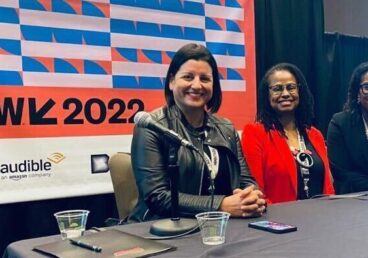
As Vice-President of Technology & Products Program Management at salesforce.com, Jenny Cheng is responsible for the integrated planning, analysis and delivery of all strategic programs across the Product, Technology, Security and internal Information Technology teams. She is a member of the company’s Technology Executive team reporting directly to salesforce.com’s EVP & Co-Founder Parker Harris.

Salesforce.com is the enterprise cloud computing company. Cheng joined salesforce.com in 2002 and continues to be instrumental in the growth and evolution of the Technology & Products organization’s delivery of Cloud Computing. Over the past 8 years, Cheng and her team have delivered product functionality through three major releases per year with 99.9%+ uptime of the service in addition to 4 new worldwide data centers. Internally, Cheng has driven innovative employee learning and development programs through her creation of the Technology People & Leadership team (TPL) and in 2006, she championed one of the largest successful Agile transformations of a Technology & Products organization with the creation of Agile Delivery Methodology (ADM).

Cheng brings over 15 years of engineering, management consulting and senior management experience to her current role at salesforce.com. Previously, she served in various positions at small startups including Seer Technologies (an IBM/CS First Boston spinoff), DigitalThink (now Convergys) and Embark (now The Princeton Review) as well as larger Fortune 100 companies such as Deloitte Consulting and Charles Schwab. She has spoken at various conferences on topics ranging from Agile (ADM), Leadership and Women in Technology. Cheng holds a Bachelor of Arts degree in political economics from the University of California at Berkeley.